Criticising Islam is no longer the taboo it once was. And that is a welcome development. Now it is necessary to take on board the implications of this shift.
Not long ago any kind of criticism of Islam or Muslims was likely to be widely condemned as Islamophobic. For that reason people were understandably anxious about raising the topic. It took a degree or bravery to raise the topic in public forums.
This was particularly clear in relation to the discussion of anti-Semitism. It was widely acceptable to criticise extreme right anti-Semitism while left wing anti-Semitism in its Corbynist form was sometimes derided. But few were willing to discuss anti-Semitism within Britain’s Muslim communities.
Last weekend’s British newspapers provide a measure of how much things have changed recently in the coverage. In particular two comment pieces by prominent Muslim commentators. Fiyaz Mughal, an influential figure in counter-extremism, wrote an article in the Sunday Telegraph arguing that Islam has an anti-Semitism problem. Over at the Times Kishwer Falkner, a former chair of the Equality and Human Rights Commission, argued that their silence on anti-Semitism shames British Muslims.
Of course, neither was arguing that all Muslims in Britain were hostile to Jews. On the contrary, their case was that the anti-Semitic element within the community has to be recognised and tackled.
But even before the horrific Golders Green stabbings last week it was becoming more acceptable to criticise Islam or elements of the Muslim community. Not in woke circles of course but in wider society.
Leaders of political parties have criticised the behaviour of elements of the Muslim population. Kemi Badenoch, the Conservative leader, criticised the recent public prayer by Muslims in London’s Trafalgar Square. Nigel Farage, the Reform leader, went even further with the demand for such practices to be banned.
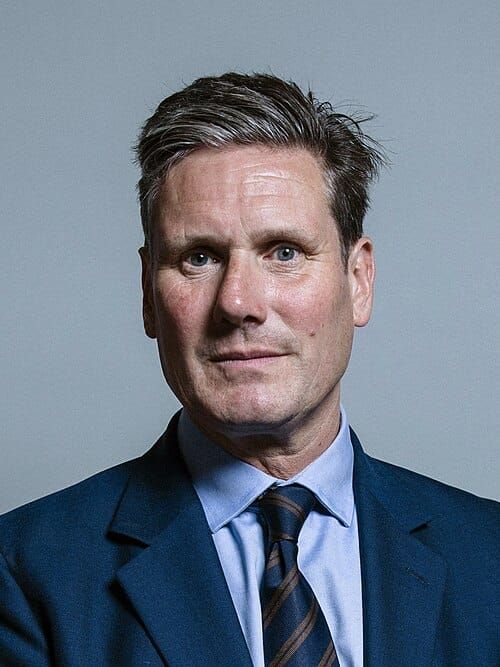
Admittedly the left is still pushing back against such arguments. Keir Starmer, the prime minister, claimed that the Conservative party “has a problem with Muslims” after the criticism of the Trafalgar Square public prayers. But even Starmer has, in a guarded way, criticised Islamist anti-Semitism.
That does not mean that every criticism that is raised is correct. On the contrary, some is misplaced. But it is important that such points are debated openly rather than shut down as taboo.
However, the shift in the temper of the discussion carries an increased responsibility for those who want to criticise the behaviour of Muslims. Rather than just talk in general of Islam, Islamism or Islamic extremism they should be more specific about what they are condemning.
Relatively few critics know much about Islam as a religion. Many also fail to recognise that the Muslim population in Britain is extremely diverse. It has origins in different countries, speaks many different languages and represents different streams of Islam.
Even fewer critics have even a nodding recognition of the meaning of Islamism even when they use the term. They are often unaware of the reactionary political movement which first emerged in Egypt in the 1920s. Hardly any can name its key thinkers such as Sayyid Qutb, Abu A’la Maududi or Yusuf al-Qaradawi.
This ignorance is apparent in the vague and often contradictory ways people use terms such as Islamism, Jihadism and Islamist extremism. Few seem to have a clear idea of the specific meaning of these terms.
This matters because if Islamism is such a threat it is necessary to understand it. The nature of its aims and doctrine need to be grappled with if it is to be defeated.
It is also only through a proper understanding that it is possible to grasp Islamism’s overlap with identity politics as I have discussed here. If Islamism is just seen as an extreme form of Islam it is hard to fathom why the left has such an affinity for it. But if both progressivism and Islamism are understood as complementary forms of anti-modern reactionary politics it makes more sense.
It is to be welcomed that criticising Islam and related movements is no longer the taboo it once was. But that is only the first step in the battle. It is now more urgent than ever to develop an understanding of Islamism as a political movement which exists within the wider Muslim population.
For my articles on Islam and Islamism click on the link HERE
PHOTO: "Official portrait of Keir Starmer crop 2" by Chris McAndrew is licensed under CC BY 3.0.
