Those in positions of leadership at some of America’s top universities have clearly grasped the need to modify campus culture in relation to tackling anti-Semitism. These include the presidents of Columbia, Harvard and Princeton.
This is clearly the best safeguard against anti-Semitism. It will ultimately achieve far more than lawfare. However, it is inevitably going to be slow work and individuals will suffer in the meantime.
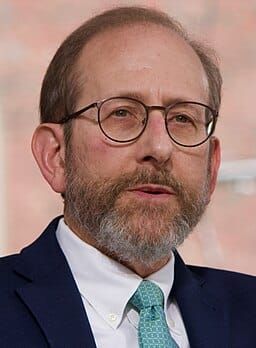
Alan Garber, the president of Harvard, recently shed some light on progress made on combatting anti-Semitism there. He told the Identity/Crisis podcast from the Shalom Hartman Institute that substantial progress has been made in managing the potential fallout from protests. This was achieved largely by clarifying the guidelines covering the holding of a protest.
Garber also said that the problem of some professors foregrounding their own, often radically anti-Israel, views was being addressed. This was being done without hindering free speech because Harvard’s policy of institutional neutrality, referred to as institutional voice, was designed to safeguard free expression.
However, Israeli students in particular found themselves to be the victims of social shunning. In some cases other students refused to have anything to do with them once discovering they were Israeli. If a student refused to participate in a Harvard research project because one of his peers was Israeli this can be tackled. But it cannot be addressed by such means in other contexts.
Garber’s suggestion for tackling this phenomenon is to try to build empathy. However, that requires both sides of an argument to be prepared to invest effort in doing so. Unfortunately it is not obvious that, say, Students for Justice in Palestine are open to this approach.
There is reason to believe that Garber’s assessment of the situation at Harvard is fair. Although he has been criticised by various anti-Israel groups on campus his efforts to steer a course between various factions at Harvard and the Trump administration have won praise. He has been made Harvard’s president for an indefinite period.
Interestingly Garber’s comments were echoed by Claire Shipman, the acting president of Columbia, which, rightly or wrongly, became regarded as the epicentre of anti-Semitism on American campuses. She has said that the university leadership has done all it can to improve the climate and morale on campus. Further improvements will have to come, as she put it, “from the bottom up”.
Again Princeton is resisting disruptive activities by certain student groups aimed at forcing the university to sever links with Israel. Yuval Donio Gideon, head of the Public Diplomacy Department of the Consulate General of Israel in New York, recently visited Princeton to discuss the situation of Israeli and other Jewish students at Princeton. He was complimentary about President Christopher Eisgruber’s efforts at combatting anti-Semitism on Princeton’s campus
It is interesting that Harvard and Princeton did not follow Columbia in capitulating to pressure from the Trump administration. That is in spite of Columbia considering itself as the most radical of the Ivy League universities. Princeton announced it would not accept terms proposed by the Trump administration even before Harvard did. This is presumably an indication that it felt confident it could rebut charges of fostering an environment in which anti-Semitism could flourish. That is presumably because its institutional culture was relatively healthy.
Harvard’s decision to turn and fight can partly be explained by the fact its finances are much stronger than those of other universities. That is despite the disastrous testimony to congress by Claudine Gay, then the university’s president, in December 2023. Back then she notoriously stated that calls for a genocide of Jews might not breach its policies.
Harvard has also always had its defenders among its Jewish faculty. Steven Pinker, a renowned public intellectual, is an interesting case in point. He has certainly criticised Harvard in many respects, not just on grounds of anti-Semitism. But he has consistently said that the charges of anti-Semitism are overblown and certainly do not warrant government intervention. It will be interesting to see how things develop in the upcoming semester.
Guy Whitehouse is a member of the Academy of Ideas and the Free Speech Union. His views do not necessarily reflect those of those organisations.
The views expressed in this article do not necessarily reflect those of the Radicalism of fools project.
PHOTO: "Harvard Alumni Day 2025 - Alan Garber 28 (cropped)" by Xuthoria is licensed under CC BY-SA 4.0.