“Follow the money”. I have heard that phrase several times recently as an explanation for the strength of anti-Zionism and even overt anti-Semitism on university campuses. But although there is some truth to the argument on finance its importance is exaggerated. Its impact would be considerably less if not for the broader intellectual shift in western societies.
The claim on finance is normally focused on the massive contributions to American universities, mainly from Qatar, to fund anti-Semitic and anti-democratic ideologies. In turn the desert kingdom has close ties to the Muslim Brotherhood, the original Islamist organisation.
That means that Jewish students on campus face a well-funded array of forces including anti-Israel academics and activist organisations. That is of course unless they explicitly renounce any identification with Israel. If they do that they are likely to be incorporated into the broader anti-Israel movement.
More generally many academics promote a more general loathing of the West. For example, post-colonial theorists argue that western history is essentially one long litany of barbarism. There is little room for complexity or balance in their takes.
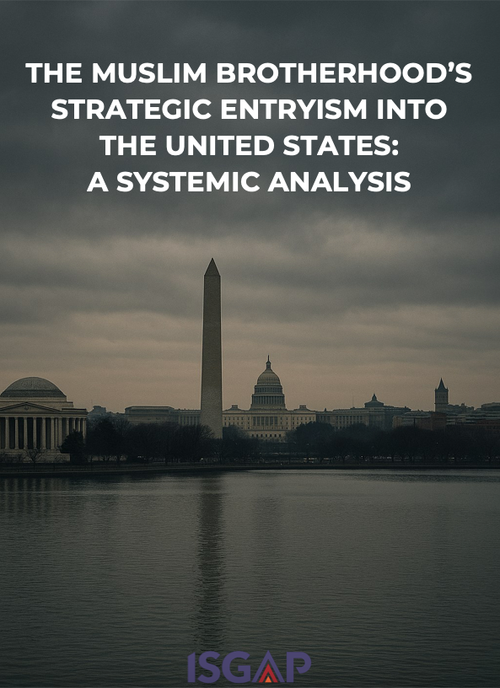
The Institute for the Study of Global Antisemitism and Policy (ISGAP), a research organisation, has examined these funding trends since 2012. Its Follow the Money project has published several reports showing how such influence is wielded including funding research and anti-Israel campaign groups. Often it is elite universities which receive such funding which can be funnelled into arts, natural sciences and social sciences.
According to ISGAP the many billions of dollars of funding is often channelled through front organisations. That means it evades requirements for foreign funding of universities to be publicly disclosed. It is so called “dark money”.
In this context ISGAP argues, I think rightly, that it is important to distinguish between Islam and Islamism. The former is a religion whereas the latter is best seen as a form of politics wrapped in Islamic language. Islamists see themselves as engaged in a civilisational struggle with western societies. To pursue this battle they pursue the doctrine of tamkeen or institutional entrenchment in western societies. That explains their lavish funding of western universities and their attempts to influence other key institutions in the West.
Naturally such backing is an advantage for anti-Israel and anti-western movements. Political organisations often struggle to get sufficient funding. However, it is important to recognise that in important respects the atmosphere is auspicious for such organisations. In that sense Qatar is pushing against an open door.
Identity politics would be an influential force in western universities even without such funding. The assumption that western societies are divided into immutable identity groups is well established. These can include, from an identitarian perspective, whites, ‘people of colour’, Jews, Muslims and others.
From this premise the outlook goes on to argue that there is a fixed hierarchy of such groups. Whites are generally seen as at the top, enjoying ‘privilege’, while people of colour are at the bottom. Jews are viewed as a particularly privileged part of the white group. Muslims are regarded as oppressed people of colour.
In this world view such fixed divisions can never be overcome. The dream of equality – where everyone is treated equally – is seen as futile. Instead the best that can be hoped for is to take resources and power away from those deemed privileged. That is what contemporary leftists mean when they talk of equity.
Israel in this world view exemplifies the broader problems of western privilege and modernity. Hostility to Israel is particularly pronounced as it is seen to embody in an acute form all that is deemed wrong with the West. In that sense anti-Zionism can be seen as a particular form of western self-loathing.
This identitarian world view is informed by a deep social pessimism which is nowadays associated with supposedly radical politics. Many in the West, particularly at elite universities, identify as progressives. For example, a survey of the Harvard graduating class of 2023 found that 65% identified as progressive or very progressive. Only 12% identified as conservative or very conservative while 22% described themselves as moderate.
Progressive attitudes tend to entail cynicism towards freedom and democracy, at least in the conventional sense of those terms. They also tend to be pessimistic about the possibility of transcending the divisions between people. They no longer uphold the 1963 dream of Martin Luther King, the great civil rights leader, of transcending the differences between black and white, Jews and gentiles.
It is in this atmosphere that anti-Semitism can thrive alongside hostility to the West more generally. Funding from Qatar and others gives those making this case more impetus but it has more fundamental drivers.