How come Britain’s Green party, arguably the most anti-Zionist party in Britain, is led by someone who describes himself as “proud to be Jewish”? Is there some logic behind Zack Polanski’s claim or is he completely unhinged?
He will be supporting a motion at the party’s spring conference this month which says the Green party must define itself as an anti-Zionist party. It states that “Israel is an apartheid State committing genocide” and then goes on support the “establishment of a single democratic Palestinian State in all of historic Palestine.”
In other words, this is an explicit call for the destruction of Israel. It goes way beyond what could reasonably be described as just criticism of Israel despite what the Greens have claimed. It amounts to demonising the world’s only Jewish state.
If this motion passes it will be another step in an anti-Israel trajectory that has been clear since Polanski became the Green leader last September. In October it called for a boycott of all of Israel’s sports teams. The previous month it said Britain should withdraw from the Eurovision Song Contest if Israel is allowed to participate. And one of Polanski’s first acts as Green leader was to call on the British government to arrest the Israeli president, Isaac Herzog, when he visited Britain.
So the moves to try to purge the world of any Israeli influence will likely culminate in a call to destroy Israel itself. Eliminating the world’s only Jewish state does somehow not, in Polanski’s eyes, contradict his claim to be a proud Jew. On the contrary, he seems to assume that supporting Israel’s right to exist is somehow shameful.
Of course Polanski is far from alone in his party in taking such a view. Mothin Ali, now the Green’s joint deputy leader, released a video shortly after the 7 October 2023 pogrom against Israel urging its viewers “support the right of indigenous people to fight back”. In effect he cast a premediated act of mass murder aimed at Jews as a heroic act of resistance against oppression. He did later apologise for any “upset” he may have caused but not for the content of his statement.
A striking feature of the Green’s turn to anti-Zionism is its rapidity. Its 2019 general election manifesto did not mention Israel or the Palestinians at all. The 2024 general election manifesto accused Israel of war crimes and demanded an end to arms sales but it also called for the release of the hostages and did not explicitly demand Israel’s annihilation.
Indeed it has recently come to light that Polanski himself has markedly shifted his position in recent years. In a 2018 interview for Kingston Green Radio, conducted when he had just become a founder member of the Jewish Greens groups, he criticised the party at the time for an obsession with Israel. He also castigated it for failing to adopt the IHRA definition of anti-Semitism. That is a definition which explicitly supports Israel’s right to exist. In October 2020, writing for Bright Green, he again advocated the party adopting the IHRA definition. In recent years he has moved to what he has described as a non-Zionist before his shift to an explicitly anti-Zionist position.
It is hard to be sure why the Greens in general, and Polanski in particular, have taken an anti-Zionist turn in recent years. Practical considerations, like trying to appeal to Muslim voters and progressives, may be one factor. The craven western reaction to the 7 October 2023 pogrom has also accelerated a more general atmosphere of anti-Semitism. It has become acceptable not just to criticise Israel but to demonise it. The obsession that Zack Polanski not long ago criticised has become commonplace.
That still leaves open the question of whether the fact that Polanski is Jewish, a self-proclaimed proud Jew, has any bearing on the Greens’ policies. Or perhaps it is just incidental?
The likelihood is that it would have made its shift whoever was leader of the party. Its turn to an explicit anti-Zionist trajectory has widespread support of its members.
However, from the perspective of the identity politics he upholds he is probably under particular pressure to take an anti-Zionist line. Against this backdrop it is to his advantage to distance himself from mainstream Jewish institutions which identitarians often deem as privileged and “far right”. From that perspective it is necessary for those Jews who want to be considered virtuous to overtly distance themselves from Israel.
Zack Polanski’s change of name at the age of 18, he was originally called David Paulden, gives some indication of his mindset. By changing his last name back to an earlier family name he is identifying with previous generations of Jews. These mainly came to Britain in the late 19th or early 20th century – that is before Israel was founded.
Anti-Zionist Jews would find it hard to argue that Jews were generally privileged over that earlier period. That, after all, included the Holocaust and mass pogroms in eastern Europe. Instead, they typically argue that Jews somehow became privileged from the mid-20th century onwards with Israel’s creation. As some put it Jews at that time, both in Israel and the diaspora, "became white folks".
Polanski’s change of name came well before his conversion to anti-Zionism but it never the less gives a clue to his mindset. He can insist he is not one of the supposedly privileged Jewish majority who support Israel’s right to exist. Instead he can claim to be siding with the oppressed while simultaneously condemning most Jews as supporters of an allegedly supremacist state.
That is what he has apparently come to mean when he describes himself as a “proud Jew”. He regards the Jewish majority who support Israel’s right to exist as shameful.
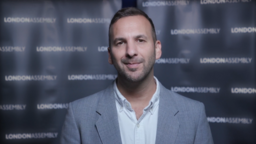
PHOTO: "Zack Polanski 2023" by London Assembly is licensed under CC BY 3.0.