I have decided not to write about the Israeli election this year for several reasons. It is partly because it is difficult to add anything meaningful to the already voluminous coverage. More importantly there is still a lot of work to do in terms of my allotted task of rethinking anti-Semitism. That includes probing deeper into its contemporary anti-Zionist manifestations.
1) There are many people who follow the election more closely than I can. For those looking for a steer I would expect better coverage from those who live in the country and speak fluent Hebrew. That is not a guarantee of astute reporting but it makes it more likely that it will be better informed. Haviv Rettig Gur, who has his own podcast and writes for the Free Press, is certainly one of the best. Others include Amit Segal and Gadi Taub.
2) The composition of the next government will probably be unclear even after the results are known. Given how close the polls are the outcome could well be inconclusive. Whoever forms the next government may well have to engage in weeks of haggling to form a ruling coalition with other parties. Even then the result might not be a stable government. More rounds of elections could follow. For these reasons those who proclaim this election is historic or existential are premature in their assessment. Such judgements can only be certain with the benefit of hindsight.
3) The composition of the next government is unlikely to make a huge difference to those living outside Israel. Most likely it will be similar to the existing coalition in its political complexion.
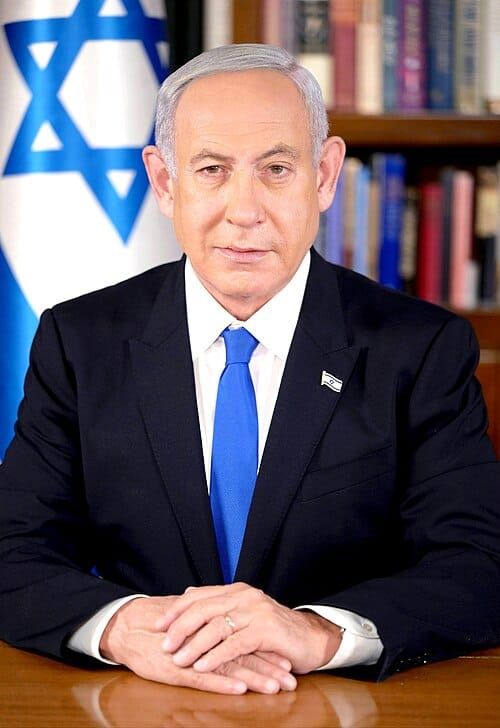
4) If Benjamin Netanyahu is unseated as prime minister that would represent an important symbolic shift. However, it is too early to predict this outcome with confidence. No doubt Israel’s enemies as well as many patriotic Israelis would welcome the end of his protracted reign if it does happen. In any event it is not necessary to follow the details of the election to grasp the significance his departure would represent.
5) Most importantly, I have argued since the launch of the Radicalism of fools in 2021 that my goal has been to develop a better understanding of anti-Semitism. It has never been to join the outsized pool of writers reporting on Israeli news. To the extent I follow Israel it is with a view to achieving my objective. There is still an awful lot to do in this respect. Among the main tasks are:
*Developing a better understanding of anti-Zionist arguments. These are all too often dismissed by Israel’s supporters rather than examined to show their weaknesses. There is a large and rapidly growing canon of anti-Zionist thought that needs to be challenged more forcefully. That includes unpacking key accusations against Israel such as that it is an apartheid state, settler-colonialist and guilty of genocide. Jewish anti-Zionists, a small but influential group, have played a key role in developing such notions. For that reason analysing their arguments has become a particular focus for this site.
*Showing that anti-Semitism is neither ancient nor reducible to hatred of Jews. Anyone who follows the Radicalism of fools will know that this is one of its main themes.
*Showing why elite thinking in the West is proving so amenable to anti-Zionism. The speed of the shift is remarkable.
*Explaining how Islamism as a political movement with anti-Semitism at its heart operates within the broader Muslim world.
PHOTO: Government Press Office of Israel.