"From the river to the sea!" has been chanted on thousands of anti-Israel marches since the Hamas-led pogrom in southern Israel on 7 October 2023. The implication is that the area between the Mediterranean and the river Jordan should be purged of Israel's presence. It is a call to literally wipe Israel off the map.
This demand is often justified by the designation of Israel as a settler-colonial state. Today's opponents of Israel argue it is driven to eliminate the Palestinians. By this they mean it wants to kill what they deem as its indigenous people and destroy their culture. For people who hold this view, the only solution is for Israel to be eliminated instead, although they often refrain from saying so explicitly.
To be sure there are still some who call for a two-state solution. From their viewpoint the area should be split between Israel and the Palestinians. But this call has become increasingly uncommon, on both the Israeli and Palestinian sides, since the 7 October atrocities.
The characterisation of Israel as a settler-colonial state goes back at least as far as the 1960s but things were different back then. At that time Israel’s critics typically saw it as an anomaly in an era when the European powers had largely retreated from their colonial possessions. In contrast, those who brand Israel as a settler-colonial today see it as an expression of a wider problem of settler-colonialism. For them America, Australia, Brazil and Canada are among those countries still regarded as settler-colonial.
The first part of this article looks at the worldview of Patrick Wolfe, the late Australian historian who played a key role in developing the 21st century critique of settler-colonialism. The latter part contrasts his views with those of Maxime Rodinson, one of the most high-profile exponents of the earlier conception of settler-colonialism.
Wolfe’s outlook echoes in today's anti-Israel slogans and the news about the Middle East. Although relatively few read Wolfe himself, his ideas have become widely disseminated through his influence on the work of others. For example, Ilan Pappe, a prominent anti-Zionist Israeli historian, is heavily influenced by Wolfe.
Wolfe’s work also reflects a broader mood of pessimism that pervades western societies. Israel may be seen as the epitome of the problem, but that pessimism expresses a broader self-loathing within the West.
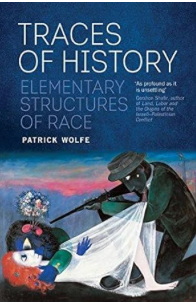
His Traces of History: elementary structures of race, was published in January 2016, a month before he died. He was born in 1949 in Yorkshire but made his home in Australia. Son of a German Jew and an Irish Catholic, he wonders whether to consider himself Jewish.
Wolfe laid out his concept of settler-colonialism as structure. For him it amounted to a form of society in which white, European settlers were dominant. There was no chance, in his view, that such societies could be redeemed.
He argued that as agriculture and trade in Europe began to modernise, they provided the drive for settler-colonialism, giving it an “insatiable dynamic whereby [it] always needs more land”. The distinctive feature of Wolfe's outlook was his emphasis on settler-colonialism as an ongoing process. Positive change in those nation-states is, in his view, precluded by their origin in the violent displacement of the indigenous populations. Their history meant that the idea of a nation and its state has a corruption at its heart. For Wolfe, the colonial period did not end; it remains embodied in those countries today.
The concept of settler-colonialism was pivotal to Wolfe's point of view because it is the jumping-off point for his particular explanation of racial thinking. He said race was “colonialism speaking” - by which he meant that white colonists saw that black- or brown-skinned people were intellectually and morally inferior. That idea allowed the upper social echelons to sidestep the conflict between their liberal democratic ideal of equality and colonial reality. Wolfe maintained that racial difference was used to justify territorial dispossession and colonisation. The indigenous peoples were expelled from their traditional territories; their specific ways of life and their attachments to particular areas of land were destroyed.
He argued the native peoples were deemed inferior by the colonists. They were therefore excluded from modernity and the rights that went with it. Settlers from the West detached them from their homeland.
Wolfe used his concept of settler-colonialism as process and the racial thinking linked to it as the starting point for his condemnation of Israel. He wrote about the mobilisation of "Europe's preaccumulated colonial resources...[and] the historical preconditions that equipped the invaders [of Palestine] ...before they set foot in Native country." Wolfe emphasised that Israel was founded by white, Ashkenazi Jews (mainly from Eastern and Western Europe), who conceived of Zionism in the late 19th century. Their fatal flaw, said Wolfe, was to embrace the racial separation of Jews. They accepted that they would never be fully integrated into European society and, in response, sought a separate Jewish homeland. He argued that those Jews who supported Zionism set themselves apart not just from gentile European society but also from the Arabs in the land they settled.
The book provides a detailed account of the Zionists' settlement in the first half of the 20th century. Wolfe was enraged by the Zionists' mobilisation of Jews around the world to purchase land. For him, the important fact was the displacement of the Palestinian peasants. Wolfe condemned Zionist finance and organisation because, in his telling, it meant that Native agriculture and artisans were overwhelmed.
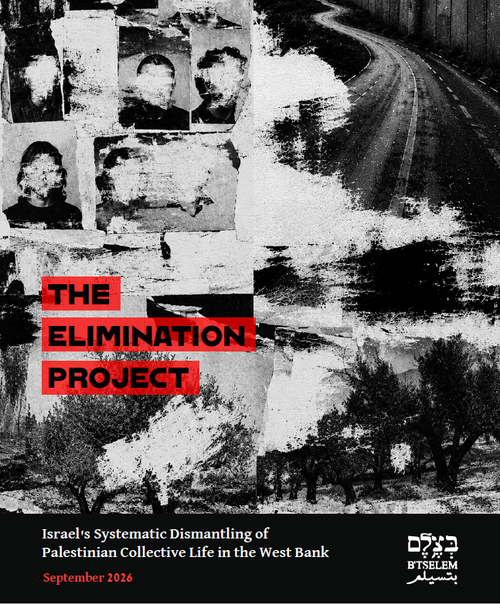
For Wolfe, the Zionists' displacement of Palestinian peasants embodied in time, place and logic the link between settler-colonialism and racial thinking. What he and others on the anti-Israel side typically characterise as the Nakba (catastrophe) was not confined to the displacement of about 750,000 Palestinians with Israel’s establishment in 1948. It was part of what he characterised as its elimination of the indigenous Palestinian population, and that it continues to this day. For those espousing Wolfe's thinking, the conclusion often drawn is that Israel itself has to be destroyed to resolve the problem.
There are several fundamental flaws in his account. In common with most anti-Zionists he grossly underestimates the force of anti-Semitism. From the late 19th century onward Jews increasingly moved towards Zionism because anti-Semitism was becoming such a powerful force in Europe. To make matters worse they were left isolated as few non-Jews supported them. Jews fled to Israel, from Europe and the Middle East too, all too often because they had nowhere else to go. The plight of the Palestinians was not at the forefront of their concerns.
Wolfe's assertion of settler-colonialist Israel’s logic of elimination is questionable. In 1948 the total Palestinian population was 1.4 million according to Palestinian sources. By the end of 2025 the total Palestinian population worldwide, including what is characterised as the Palestinian diaspora, was estimated at 15 million - a more than 10-fold increase since Israel's founding. By this metric if Israel’s goal is to eliminate the Palestinians it has been spectacularly unsuccessful. This kind of flaw in Wolfe's argument matters.
But the focus here is on recognising the differences between Wolfe and the earlier generation of settler-colonial theorists. While he saw it as an ongoing process his forerunners tended to see it a hangover from the past. His argument suggests the only solution is Israel’s elimination while earlier thinkers were sometimes more open to compromise.
Perhaps the best known of the earlier generation was Maxime Rodinson. He was a French leftist expert on the Middle East whose classic book Israel: A colonial settler state? was first published in French in 1967. That was only a few years after France was forced to withdraw from Algeria after its bloody civil war.
Rodinson was born in 1915, to East-European Jewish parents who had moved to France to escape the anti-Jewish pogroms at the end of the 19th century and early in the 20th. They were killed in the Holocaust. Although Rodinson had been a member of the pro-Moscow French Communist Party (PCF) he was expelled in 1958 for taking an increasingly independent line. Rodinson was enthusiastic about the anti-colonial movements of his time.
Rodinson's 1967 work argued that Israel was a settler-colonial entity. But he saw the period from 1939 to 1948 as one of anti-colonial struggle by Jewish settlers against the occupying force of the British mandate. In contrast, Wolfe saw that period as an unforgivable concession by Britain to the Zionist movement. Rodinson viewed racism as a strand in Zionism and the early Israel but not as central nor inherent. In contrast, Wolfe's approach was fatalistic. He saw Israel's nature as viciously racist and aggressive, always dictated by its settler-colonial process. Rodinson showed how the early Zionist settlements were shaped by the dynamic between the old imperial powers, Britain and France, and before that the Ottoman empire. Israel's emergence was formed by new relations between the old powers in the face of anti-imperial revolts and the rise of America as a global power.
In his account of the period from 1939, Rodinson was clear-eyed about the urgency of opening up Israel as a life raft for Jews during the Holocaust and its aftermath. Wolfe’s approach was different. He did refer to the Holocaust twice in his 2016 book and condemned it. But it featured only once in his account of the establishment of Israel, as an event that dramatically increased the flow of Jewish immigrants to the area. Rodinson saw the Holocaust as a catastrophe, damaging to civilisation, and crucially motivational for the Zionist movement. For Wolfe, the Holocaust sat in a sea of injustices, massacres and cruelty - all of which were real. He portrayed it as just one more tragic event, rather than a rupture in the body of modern Western society.
In 1967, Rodinson was at pains to stand aside from a binary of being either pro-Israeli or pro-Palestinian. His book was originally published in Les Tempes modernes (Modern Times), a French literary publication associated with Jean-Paul Sartre, a key French cultural figure. It was part of a special edition on Israel and the Palestinians, of over a thousand pages, separated into pro-Israeli and pro-Palestinian parts. By coincidence it came out in the same month as the 1967 six-day war between Israel and its Arab neighbours.
Rodinson refused to be placed in either the Israeli of the Palestinian camp - to the dismay of both. He dismissed the consequent insults and accusations of treason. His message was that the question was too important to be dealt with in a simple binary framework. He insisted that facts on the ground could be accepted and adapted.
However, his relatively conciliatory attitude towards Israelis is in sharp contrast to that of Wolfe. For Rodinson: “Colonists and colonisers are not monsters with human faces whose behaviour defies rational explanation, as one might think from reading left-wing intellectuals”. He then went on to argue that: “Belonging to a colonising group is not the unspeakable and unpardonable crime it is thought to be in cafes along Saint-Germain and Saint-Michel boulevards”.
Between 1967 and the early 2000s the intellectual climate shifted considerably. One of the reasons Wolfe recreated a detailed history of the Zionist movement and Israel's emergence was to recast the story. He wanted to remove it from the grasp of Rodinson, who was part of a scene that, despite the experiences of the second world war, retained a kernel of optimism about the West. That did not fit with Wolfe's approach on Israel or more broadly.
Wolfe's explanation of race expressed not just loathing of Israel but a rejection of Western society and ideas. Wolfe's disdain for the West included an explicit rejection of both the nation-state and the legacy of the 18th century Enlightenment. His solution was to embrace indigenous people because he saw them as free of the racism inherent in Western societies.
Many find Wolfe’s ideas attractive. He recounted a detailed history, and set up his intellectual framework on it. He expresses genuine anger at the injustices of today and the past. For people who set out to understand the conflict between Israel and Palestinians, or who are concerned about inequality and racism, there is a lot they could find convincing. Wolfe's writing at many points is poetic in an understated way and his ideas sometimes subtle.
Rodinson's conclusion in 1967, fewer than 20 years after Israel's foundation, was to suggest the possibility of compromise between Israel and the Palestinians. Some 50 years later Wolfe saw no such prospect. What he characterised as Israel's settler-colonial nature made it inherently brutal and exclusionary.
Wolfe did not say it explicitly but his message was clear: for Palestine to be established, Israel must be destroyed. It is tragically a conclusion that the current generation of anti-Israel activists has largely embraced.
Rob Martin works as a heating technician in mid-Wales.
The views expressed in this article do not necessarily reflect those of the Radicalism of fools project.
Key works by Patrick Wolfe include:
“Purchase by other means: The Palestinian Nakba and Zionism’s conquest of economics”. Settler Colonial Studies. 2(1). 2012
“Settler colonialism and the elimination of the native”. Journal of Genocide Research 8(4). 2006.
Traces of History: Elementary Structures of Race. Verso 2016
Further reading:
Stefanie Borkum. “GUEST POST: Colonialism reconsidered” Radicalism of fools. 4 December 2023.