Columbia University, long known as a bastion of post-colonial and anti-Israel thinking, has launched a new undergraduate major in global affairs and public policy. In contrast to the approach the Ivy League institution is known for the new degree is expected to cover a range of different perspectives. It looks like the new initiative could be the result of pressure from the Trump administration.
The course is notable in that it includes views on Israel other than those of anti-Zionism and post-colonialism. It is funded by the Mike and Sofia Segal Foundation, a philanthropic organisation which promotes Jewish heritage. It also offers grants to support, among other things, academic freedom and civil discussion.
Those allocated a place on the course (by lottery) will take four foundational modules. They will then do a series of elected modules before finishing with a practical exercise. In the latter they will be put into teams and act as consultants to government agencies, other state actors and non-profit organisations analysing policy challenges.
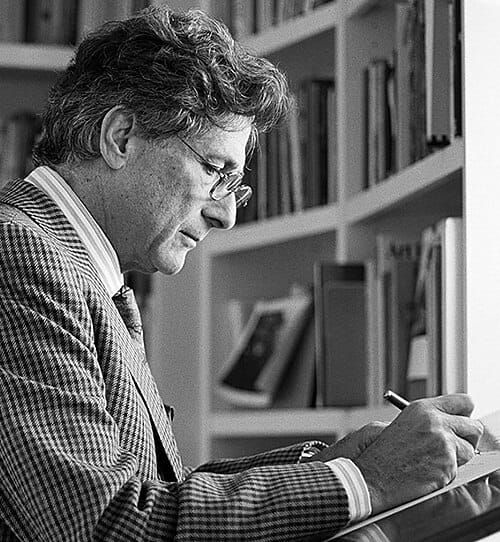
Edward Said (1935-2003), a Palestinian-American academic and literature professor at Columbia from 1963, was a foundational figure in post-colonial theory. He was also a political activist including membership of the Palestinian National Council. In Orientalism (1978), his most famous book, he critiqued what he saw as contemptuous western attitudes towards the Orient. These were, in his view, widely reflected in western culture. In parallel with that he was sharply critical of Israel which he saw as a western imposition on the Middle East.
Said was only the best-known of a slew of academics at Columbia who took a similar view. Rashid Khalidi, another prominent Palestinian-American academic, followed his stance. Joseph Massad, a professor of Arab politics and intellectual history at the university, gained notereity when he described the 7 October pogrom as a “stunning victory of the Palestinian resistance”. Massad later argued his views had been taken out of context and misrepresented.
The launch of the new course has stirred controversy at Columbia. It looks certain that this is all part of Columbia’s July 2025 deal with the Trump administration over tackling campus anti-Semitism.
Some have complained that the launch was rushed and that therefore the quality of the course has not been adequately checked. However, it is likely that such complaints often mask objections to the fact that the new course does not portray Israel negatively.
In some sense it is unfortunate that this new course might have been launched because of pressure from the Trump administration. It will inevitably be represented by some as an attack on academic freedom. In this context it should be noted that Rashid Khalidi resigned as a professor in October 2024 claiming he could no longer teach a Palestinian history course at the university. However it simply is not credible to claim that all pro-Palestinian teaching and activism at Columbia has stopped.
In addition, a counter-argument could be made that if Columbia had promoted a balanced curriculum in the first place none of this would be necessary. It is also relevant in this regard that the new course does not exclusively focus on Israel. It includes material on other countries in the Middle East and indeed other regions of the world.
It will be interesting to see how students allocated a place on the course react to it. As explained earlier, places are allocated by lottery, presumably meaning there is at least some chance of a variety of views being held by those who start the course. The relentless promotion of anti-Zionism played a key role in making Columbia one of the most toxic campuses following Hamas’s 7 October atrocities. This new course provides an opportunity to see how open Columbia undergraduates and staff really are to civil discourse on Israel and the Middle East.
Guy Whitehouse is a member of the Academy of Ideas. His views do not necessarily reflect those of that organisation.
The views expressed in this article do not necessarily reflect those of the Radicalism of fools project.
PHOTO: "EdSaid" by Nzmnsum is licensed under CC BY-SA 4.0.