America’s mid-term elections saw people involved in the controversies surrounding anti-Semitism on American campuses elected to Congress. This development could in turn affect the ongoing battle between the Trump administration and university administrations.
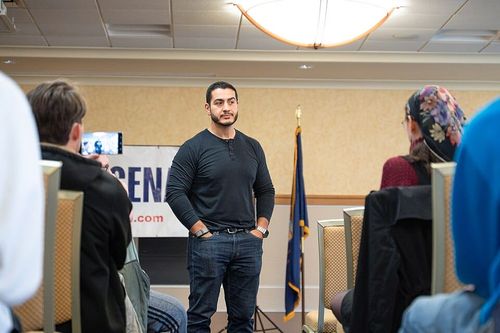
Darializa Avila Chevalier, who was involved in “Gaza solidarity encampments” at Columbia university, was elected to New York’s 13th congressional district. Abdul El-Sayed was elected as a senator for Michigan. He had called the deal struck between the Trump administration and Columbia an attack on free speech. He also accused Columbia of showing cowardice by signing the deal.
Some observers are speculating on the effect the election of such politicians will have on the battles between the Trump administration and several elite universities. The administration has threatened to withdraw federal funding and take other measures because the colleges have allegedly failed to protect Jewish students from anti-Semitism.
In the new Congress the Democrats are likely to take control of committees which could launch investigations into the legality of the administration’s activities regarding universities. Of particular interest will be who ends up in charge of the Health, Education, Labor and Pensions Committee which exercises federal oversight of universities. Many consider the administration’s actions in this field illegal.
It would be strange if Avila Chevalier did not push for investigations to be started. She will probably also call for deals struck between the administration and Columbia, as well as other universities such as Brown and Northwestern, to be scrapped.
However, the recently appointed president of Columbia, Jennifer Mnookin, has cautioned against such speculation. She has said there is likely to be little change at Columbia for the time being. Indeed Columbia is currently focused on its re-accreditation process under new rules introduced by the administration. In addition, deals cannot be easily or immediately unravelled.
Neither is it obvious whether it was the specifics of the deals struck that reduced campus anti-Semitism. It could have been a general awareness that the administration was focusing on the matter. Those concerned with campus anti-Semitism might do better to look at how things developed at universities which saw anti-Semitic activity after Hamas’s 7 October atrocities. It is also important to consider what happened at Yale where no deal was struck with the Trump administration.
Some Jewish leaders have said that substantial improvements have been made on campus. However, they are concerned that several investigations launched in 2025 have been abandoned. They are also worried that enforcement of provisions under Title VI of the 1964 Civil Rights Act might lapse as the administration loses interest. If improvements really have been made, as some Jewish leaders claim, it is more important to concentrate on consolidating those gains.
When trying to measure American campus anti-Semitism it is important not to over-emphasise the election of anti-Israel figures such as Avila Chevalier or El-Sayed. Inevitably their election has made dramatic news but it should be remembered that many of the new Democratic intake are reputedly moderate.
The crackdown on campus anti-Semitism should be a bipartisan matter. With responsible Democrats in charge of the relevant committees this could happen. It might also be a more solid basis for proceeding than relying on the Trump administration’s approach.
Guy Whitehouse is a member of the Academy of Ideas. His views do not necessarily reflect those of that organisation.
The views expressed in this article do not necessarily reflect those of the Radicalism of fools project.
PHOTO: "Abdul El-Sayed meet-and-greet by Conlan Houston 1" by Conlan Houston is licensed under CC BY-SA 4.0.
FURTHER READING: See the universities theme for more on the background to this story.