A founding principle of this website from its establishment in 2021 was to distinguish between Islam as a faith from Islamism as politics. Since then I have written 67 articles which have in some cases examined the subject in detail and in others touched on it. Over the years my conviction that this is a key distinction has if anything strengthened.
I was therefore startled to hear Brendan O’Neill, someone who I greatly admire, dispute the distinction at the recent spiked summit. Spiked’s chief political writer has made and continues to make vastly important political contributions. To name just one he has steadfastly defended Jews against anti-Semitism and supported Israel’s right to defend itself. That is both admirable and tragically rare in today’s circumstances. In this context it should also be noted that I am a long-standing and proud contributor to spiked.
I should start by emphasising that I agree with Brendan that the politicisation of Islamic identity in Britain is an immensely dangerous development. As he said Islam itself increasingly feels annoying, confrontational and supremacist to the public. Such politicisation needs to be robustly challenged. That includes, as Brendan says, steadfastly supporting the right to blaspheme against Islam.
My disagreement, to state it at the start, is that I do not think that makes the distinction between Islamism and Islam irrelevant. On the contrary, it is an analytical contrast that is more crucial to uphold than ever. That is particularly important when, as Brendan says, Islam itself feels like a huge pain to many people. Otherwise there is substantial potential for a public backlash in which Muslims are blamed for the many indignities people face. The need to maintain such key distinctions as that between Islam and Islamism, as well as between Islam and the politicisation of Islam, becomes vital.
Before exploring my case in more detail it should be noted that the framing of the debate made it hard to unpack the key concept. Tom Slater, spiked’s editor and the session chair, at the start of the session raised the question of whether it is worth distinguishing between Islamism and Islam. But, as almost invariably happens in discussions on this theme, the term Islamism was never defined. This in a context where there is huge uncertainty about what it means. Some people lean towards the view that Islam is moderate while Islamism is a form of extremism. Others counterpose Islam, often viewed in a rose-tinted way, with what they regard as backward Islamism. Others say Islamism is a fiction invented by the woke left. Yet without clarity on the meaning of Islamism it is hard to avoid arguing at cross-purposes.
To have a constructive discussion, including for those who want to reject the distinction, it is necessary to be clear about the subject in question. Otherwise people can make points about all sorts of important themes – including anti-Semitism, bigotry, immigration policy and grooming gangs – without adding much clarity.
Indeed, it was notable that Brendan himself fell back to using the concept of Islamism several times without explaining what he meant by it. For example, he described the politicisation of Islamic identity as “the functional equivalent of Islamism” without defining the latter term.
Later Brendan argued that the British elites have created a “third layer” which is not really Islam or Islamism but something incredibly dangerous and influential. This is an important insight which deserves to be examined in more detail in the future. It is an intellectual breakthrough that can be strengthened, rather than weakened, by making the logical distinction beween Islam and Islamism.
It is also important to note that the rubbishing of the crucial distinction between Islam and Islamism is thoroughly conventional. There is an exceptionally broad consensus on the question. Conservatives often argue that Islamism is a concept confected by the politically correct. For them it is a way of denying what they see as the intrinsic evils of Islam. In contrast, the woke left often ignores the concept of Islamism because it sees it as a way for far-right bigots to deny their loathing of Islam. Then there are the Islamists themselves. In their view there should be no difference between Islamism and Islam because they are the only authentic voice of Islam.
In this context it should be noted that one of the main functions of the dodgy concept of Islamophobia is to blur the difference between Islam and Islamism. If someone criticises an Islamist group, for example the Muslim Brotherhood or Hamas, they can be dismissed by the woke left and Islamists as Islamophobes.
The importance of the distinction cannot be grasped solely in relation to particular debates in contemporary western politics. It is necessary to sketch the history of Islamism since its foundation in the early 20th century.
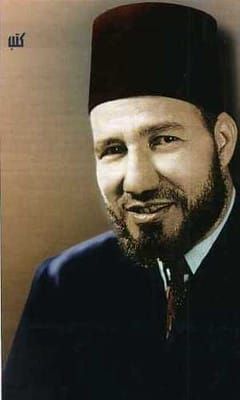
Islamism is a reactionary political movement which is almost a century old. The Muslim Brotherhood, the first Islamist movement, was founded in Egypt in 1928, by Hassan al-Banna (1906-1949). The first Islamist movement in the Indian sub-continent was Jamaat-e-Islami founded in what is now Pakistan by Maulana Maudoodi (1903-1979) in 1941. Although these movements started in the colonial world they have spread to the West in parallel with Muslim immigration (which of course is not to argue that all such migrants are Islamists). Often they operate covertly through front organisations such as charities, student movements and Palestine solidarity associations.
Although these organisations operate in the name of religion – which helps explain the confusion around them – they are better seen as political movements in an Islamic form. That is Islamised politics rather than politicised Islam. In that sense Islamism is more accurately bracketed together with conservatism, fascism, liberalism and socialism – in that they are all political ideologies – rather than with say Christianity or Judaism. Except that, unlike these other ideologies, Islamism operates solely within one religious community and claims to represent its authentic voice.
Islamism emerged in the tumultuous years following the end of the first world war. It was a time when many of the world’s leading empires had collapsed including the Austro-Hungarian, German, Russian and Ottoman. The latter was particularly important in this context as it had dominated much of the Middle East. It was also a time of a counter-reaction against the Russian revolution and other radical movements worldwide. This was the context in which fascism emerged in Europe and Islamism first emerged in the Middle East.
The Islamists were both anti-western and anti-national. Nationalist movements typically wanted to overthrow colonial rule and to replace it with domestic national movements. In Egypt, for the example, the Wafd (delegation) played a key role in the 1919 uprising against the British occupation of Egypt. In contrast the Muslim Brotherhood, when it came into existence a few years later, was not focused on Egypt as a nation. It had a transnational aspiration of creating an international Islamic order. It was also decidedly anti-modern whereas nationalist movements typically wanted to take their countries down the path of political modernisation. Although the Muslim Brotherhood is the best known there are many other Islamist networks often linked to nation-states including Iran, Pakistan and Turkey.
Although its political doctrines often refer to Islamic texts closer inspection shows they are typically of relatively recent origin. Islamism has its own distinct political concepts. Sayyid Qutb (1906-1966), widely regarded as the most important Islamist thinker, placed particular emphasis on two in particular. (He was also the subject of an excellent spiked long read by Tim Black). These are jahiliyya (a state of pre-Islamic barbarism, also sometimes spelt Jahilliyyah) and hakkimiyyat Allah (God’s rule, often translated as sovereignty). Purging the world of jahiliyya suggests the goal is not only to overthrow non-Muslim societies but those that are defined as insufficiently Muslim. For Islamists, particularly when they are talking internally, most Muslims are not considered authentic. For many Islamists the concept of hakkimiyyat Allah means that the political world should be totally subordinate to God’s will. This is a conception of the world which is implacably hostile to notions of individual rights and autonomy.
Another central idea of Islamism is that of the Jews as a Satanic force in the world. This notion also helps distinguish between anti-Jewish attitudes in traditional Islam – there are indeed anti-Jewish passages in the Koran - and that in Islamism. In reality the historical experience of Jews in the Muslim world was mixed. There were times when they were persecuted and times when, at least compared with the Christian world, they enjoyed relative tolerance. Often Jews suffered systematic discrimination as they were confined to a second class dhimmi status. In contrast, the goal of Islamism is not to discriminate against Jews but to eliminate them. In that it imported some of the worst aspects of European thinking.
The 1988 covenant of Hamas, an offshoot of the Muslim Brotherhood, provides a prime example of imported ideas. Its genocidal call for the mass slaughter of Jews is largely imported from Europe. It presents itself as an Islamic document with quotes from the Koran and the hadith (the sayings of the prophet Muhammad). But it also includes references that were most definitely not in Islamic holy texts. For example, it says that the Jews: “With their money, they took control of the world media, news agencies, the press, publishing houses, broadcasting stations, and others. With their money they stirred revolutions in various parts of the world with the purpose of achieving their interests and reaping the fruit therein. They were behind the French Revolution, the Communist revolution and most of the revolutions we heard and hear about, here and there. With their money they formed secret societies, such as Freemasons, Rotary Clubs, the Lions and others in different parts of the world for the purpose of sabotaging societies and achieving Zionist interests. With their money they were able to control imperialistic countries and instigate them to colonize many countries in order to enable them to exploit their resources and spread corruption there.” These ideas come from the Protocols of the Elders of Zion, a notorious tzarist anti-Semitic forgery which has gained enormous popularity in the Arab world and beyond.
Of course it would not be fair to expect anyone to provide a detailed account of Islamism in a short speech. But it should at least be acknowledged that Islamism is a worldwide political movement with its own doctrines, thinkers and millions of supporters. Alternatively those who want to argue that the existence of this movement is a fiction or is irrelevant need to explain why they take this view. In reality the existence of Islamism as a global political movement is all too often ignored. People frequently use the term but there is no clarity about its meaning.
It should also be noted that this is of pressing contemporary rather than just historical interest. For example, last year’s attempt to ban the Maccabi Tel Aviv football team from playing in Birmingham was not simply a spontaneous action by the local Muslim community. The local chapter of Tehreek-e-Labaik Pakistan (TLP), an Islamist political party evidently played a substantial role.
None of this is to claim that the existence of Islamism as a political movement, important as it is, is the whole story. For example, I have written several times on how Islamism and progressivism have a lot in common. Both are deeply cynical about the nation-state, opposed to modernity, anti-democratic and deeply intolerant of alternative views. The rise of progressivism in the West has therefore provided fertile ground for Islamism to flourish in America and Europe. Indeed understanding the nature of Islamism as a political movement makes the overlap with progressivism much easier to spot.
It is also true, as Brendan says, that a pernicious third way between Islamism and Islam has come into existence. That is a significant number of Muslims who identify more with a globalised Muslim identity rather than a national one. They may not necessarily be fully-fledged members of Islamist groups but they sometimes share its precepts often alongside progressive ones.
But there is no straight line between such people and writings such as the Koran and the hadith. Their views are informed by 21st century influences, often the most degraded ones, rather than beliefs that originated in the 7th century.
Essentially there are two reasons to uphold the distinction between Islamism and Islam. First, because it is an important factor in contemporary politics in many countries including in the West. There is indeed a worldwide Islamist political movement with substantial influence. That is not to say that Islam as a religious faith is flawless. But collapsing the two together makes it impossible to properly understand some key current political developments.
The second relates to Brendan’s correct point that Islam has become hyper-politicised in the contemporary West. As he said: “the politicisation of Islamic identity means that Islam itself increasingly feels to us like a pain in the arse”. He is right to argue that British society has engaged in a suicidal indulgence of Islam.
But a key conclusion I would draw is the opposite one. That it is more important than ever to maintain key distinctions including that between Islam and Islamism. Otherwise it becomes all too easy for members of the public to blame individual Muslims for the political pain they suffer.
In this context it is vital to emphasise that the politicisation of Islamic identity is driven by western progressivism rather than archaic Islamic theology. It is not a development that can be explained with reference to classic Islamic texts. The latter explanation is certainly not something Brendan is guilty of but it is more important than ever to challenge those who do use it. The Koran was written way back in the 7th century whereas the intense politicisation of identity is a recent phenomenon.
Those who focus one-sidedly on the alleged dangers of Islam should be vigorously challenged rather than indulged. Otherwise people should not be surprised if their local mosque is burnt down.
Video of the spiked session
 spiked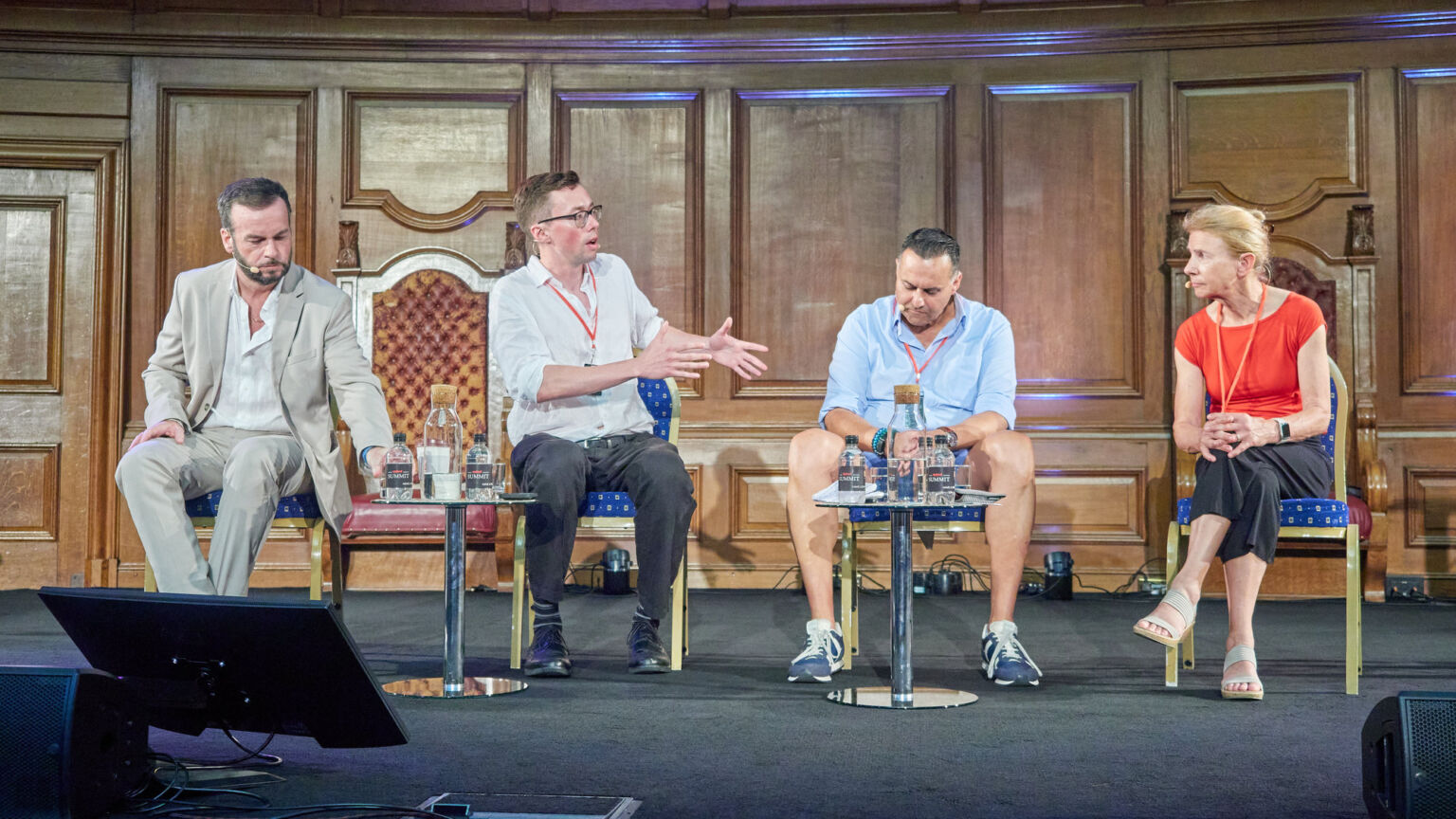
Further reading