The more I look into the subject the more I am struck by the depth of public confusion about the relationship between Islam and Islamism. Three weeks ago I argued that Islamism is better seen as a form of religionised politics rather than religious extremism. This article will look at the two broad camps on this question.
To help clarify matters I will spell out how I see the two main perspectives in relation to opposition to Islamism. I will call anti-Islam those who argue that the politically backward trends in the Muslim world are largely down to the religion itself. In contrast, I will call those who argue that there is a logically distinct reactionary political trend within the Muslim world anti-Islamist. I am firmly in the anti-Islamist school but I will try my best to give a balanced account of both viewpoints.
Before examining the question in more detail I should note the Muslim world, constituting about two billion people in total, is incredibly diverse. There are perhaps 50 Muslim-majority countries (estimates vary) and many more countries, including in the West, with substantial Muslim minorities. Significant national differences exist between each of these countries. There are also many sub-divisions within the Muslim world of which the Sunni-Shia divide is the best known.
In terms of understanding Islamism the anti-Islam versus anti-Islamist cleavage is the key one but there are significant variations within each camp. For instance, some in the anti-Islamist camp focus on the relationship between Islamism and identity politics while others concentrate on Islamist political networks. There is not one unified global Islamist movement but organisations based in the Arab world, Bangladesh, Iran, Pakistan, Turkey and elsewhere.
In practice the line between the two is often blurred. It is not always easy to tell the difference between an Islamist individual and a Muslim who is simply reactionary. This is particularly the case because those who are linked to Islamist movements often operate covertly. They do not declare their affiliation openly.
Despite these important caveats it is vital to grasp the different ways Islamism is understood, as religious extremism or religionised politics. That is an essential first step in examining the political outlook of the Muslim world more deeply with all its multiple variations.
In relation to each camp I will examine the fundamental differences, terminology, key thinkers and the challenges facing each view. I will do my best to be as objective as possible in outlining the contours of the debate.
BASIC DIFFERENCES:
Anti-Islam: The anti-Islam school sees the politically backward trends in Islam as traceable to the origins of the religion in the 7th century. It often refers to passages in the Koran and the hadith (statements attributed to of the prophet Muhammad) to make its case. For example, it points to anti-Jewish passages in these holy texts. The more sophisticated anti-Islam proponents acknowledge that the world has changed substantially since Islam’s foundation. Nevertheless, they typically emphasise what they see as the historical continuity in Islamic ideas over time. They also acknowledge the existence of groups such as the Muslim Brotherhood but see them as an example of religious extremism.
Often the anti-Islam school argues that Islam as a religion is inherently political. They point out there has been no equivalent of the 16th century Protestant Reformation. That historical event played a key role in creating the basis for the separation between government and the religious authorities. Yet, they point out, nothing comparable happened in Islam.
Anti-Islamist: The anti-Islamist school tends to see Islamism as a relatively modern phenomenon. It points to the fact that the first Islamist political movement, the Muslim Brotherhood, was founded as recently as 1928. I have argued that Islamism emerged in parallel with reactionary trends such as fascism and Stalinism. Others take different views but the emphasis is nevertheless on the political rather than the religion in itself. Islamism is seen as the result of the degradation of politics. It is typically the result of disenchantment with western modernity. That includes hostility to nationalist and leftist movements. Its ultimate end goal is typically the creation of an international Islamic order.
TERMINOLOGY:
Anti-Islam: The anti-Islam school assumes that Islam itself is the problem so its language reflects that. It talks, for example, about political Islam and radical Islam. It also often uses the term Islamism but normally to mean what it regards as Islamic extremism. It also sometimes refers to Islamist extremism which seems like a tautology if Islamism is itself defined as extreme.
Anti-Islamist. For this school Islamism is seen as an Islamised form of politics. It often makes a distinction between jihadism and institutional or participationist Islamism. The jihadis are those Islamists who are themselves willing to use violence. The institutional or participationist Islamists support violence but do not generally engage in it themselves
ADVANTAGES:
Anti-Islam: The advantage of the anti-Islam view is that it is straightforward. Reactionary Muslim leaders or movements can be taken at face value when they claim to act in the name of Islam. Bigoted Muslim preachers can also be seen as evidence that the religion itself is deeply flawed. And socially backward views or behaviour attributed to Muslims can also be traced back to Islamic doctrine. The anti-Islam school also often portrays anti-Islamists as politically correct liberals who romanticise Islam as a faith.
Anti-Islamist: Once the existence of Islamist movements is recognised it becomes easier to understand why they act in the way they do. Such movements are not hangovers from early medieval times but responses to developments in the 20th century and beyond. The anti-Islamists often argue that what are claimed as established traditions by Islamists are often relatively new. For instance, the word “sharia” is barely mentioned in the Koran. The idea of sharia as a system of state order is a much more recent development.
Anti-Islamism is also clearer on why anti-Jewish sentiment in Islam is fundamentally different to the anti-Semitic outlook of the Islamists. In Islamic lands Jews were historically often treated as “dhimmi” or “people of the book”. That meant that, along with Christians, they had a protected status but they were discriminated against. In contrast, Islamism has typically taken the view that Jews are a Satanic force which must be eliminated. It advocates not discrimination but annihilation.
The anti-Islamist school also recognises that Islamists are typically opposed to such notions as national self-determination, democratic rights and individual autonomy. This recognition in turn makes it easier to see the overlap between Islamism and progressive movements in the West. The affinity of western progressives for Islamism can be seen as having a logic behind it rather than being an anomaly. It is not, as is often claimed, akin to Turkeys voting for Christmas (or alternatively "chickens voting for KFC").
CHALLENGES:
Anti-Islam: The more sophisticated proponents of anti-Islam generally concede that not all Muslims are politically reactionary. That explains why they feel obliged to use labels such as radical Islam and political Islam to differentiate moderates from extremists. They also often fall back on using the term Islamism despite their view that Islam itself is inherently flawed. The anti-Islam school also tends to be ahistorical. It is not clear why texts which are many centuries old should have a direct impact on contemporary behaviour. The anti-Islam school is also selective in the texts on which it focuses. For example, there are pro-Jewish passages in the Koran as well as anti-Jewish ones.
Anti-Islamist: There are several challenges facing the anti-Islamist school. First, Islamists often work in a covert way. For example, through front organisations such as Muslim associations, charitable bodies, student organisations and anti-Israel organisations. They also claim to represent the authentic voice of Islam. It is therefore often difficult to separate those who are politically committed Islamists from regular Muslims with backward views. The political indulgence of Islam by western elites exacerbates this problem. Progressives tend to indulge Muslims as they are perceived to be an oppressed minority.
Second, the western public generally has little or no knowledge of the history of the Middle East or the Indian sub-continent. That is the places where Islamism originated as a political movement. They therefore typically simply assume that Islamism must be a form of the religion. The public discussion in the West exacerbates this problem as it is seldom clear about the meaning of the terms it uses.
SOURCES:
The general public, at least among those who take a view, no doubt leans more to the anti-Islam school. The history of Islamism as a political movement is little known. But there are a substantial number of experts on both the anti-Islam and anti-Islamist sides. And a reminder that even within each category there can be significant differences. There are also some who do not easily fit into either category.
This list is selective rather than comprehensive. To enable those who want to follow up the arguments in this article.
Anti-Islam – generally viewing Islamism as a form of religious extremism.
Among experts these include Ayaan Hirsi Ali, Gilles Kepel, Bernard Lewis, Raymond Ibrahim and Bat Ye’or. Journalists and others who follow this view include Andrew Bostom, Melanie Phillips and Ben Shapiro.
Anti-Islamism – those who tend to see Islamism as a religionised form of politics.
These include John Calvert, Faisal Devji, Ed Husain, Evin Ismail, Matthias Küntzel, Bassam Tibi (who examines Islamist doctrine in detail) Hussein Aboubakr Mansour (who focuses on the influence of European thought on Islamism) and Olivier Roy (who links Islamism to identity politics).
Further reading
My latest article arguing that Islamism is best seen as a form of politics.
My topic guide to Islamism with links to all of my posts related to the subject.
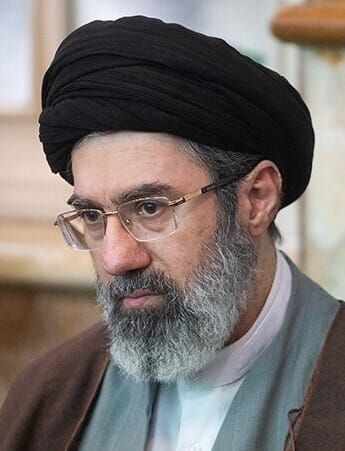
PHOTO: "Ayatollah Mojtaba Khamenei, March 8, 2026 (cropped)" by Mostafa Tehrani is licensed under CC BY 4.0.