There can be few ideas over which there is as much confusion as Zionism. For visceral opponents of Israel it is generally a swear word: a way of deriding what they regard as Jewish supremacy, settler-colonialism and racism. But even among staunch supporters of Israel there are strong disagreements about its meaning. For example, some argue that the term is no longer appropriate. Typically they contend that the movement achieved its goal in 1948, with the creation of Israel, so to talk about Zionism nowadays is meaningless.
The aim of this article is to use the historical record to push back against some of the key misconceptions about Zionism. It will argue this task is vital to support Israel as an expression of national self-determination for Jews.
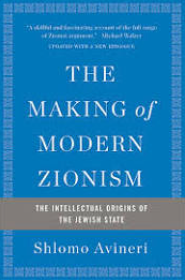
To make the case I will lean on a key book first published in 1981. The Making of Modern Zionism by Shlomo Avineri (1933-2023), a leading Israeli political philosopher, focused on the emergence of Zionist ideas rather than the political movement. It examines 17 figures who, in their different ways, developed Zionism as an outlook. Some of them, such as Moses Hess, were avowed socialists while others, such as Leo Pinsker, were broadly liberal. But rather than focus on each individual thinker the aim here is to use the material in the book to help dispel three myths about Zionism.
But simply dispelling the misconceptions is insufficient. It is also necessary to explain why they have traction.
Myth one: The rise of Zionism can be explained entirely as a reaction to anti-Semitism
It is commonly argued that Zionism reacted in response to the surge of anti-Semitism in the late 19th century. The first wave of pogroms in the Russian empire (including parts of what today is Ukraine and Poland) emerged in the early 1880s. These came in the wake of Jews being falsely blamed for the assassination of Tsar Alexander II. Then came the Dreyfus affair in France from 1894 onwards in which a Jewish army officer was falsely accused of treason. The affair was a particular shock to assimilated Jews as they assumed that they had become reasonably well integrated into French society.
These events did propel the formation of Zionism as a political movement. The First Zionist Congress was in Basel, Switzerland, in 1897. It was organised by Theodor Herzl who had covered the Dreyfus trial while working as a journalist in Paris.
However, although that was the start of the Zionist movement it was not, Avineri argues convincingly, the advent of Zionism as a political ideal. That emerged in the mid-nineteenth century when several Jewish intellectuals started propagating the idea that Jews should be seen as a nation. From this premise they drew the conclusion that Jews should have some kind of national rights. Although their vision of what a Jewish national entity would look like varied they all argued that Jewish nationalhood should be upheld.
To understand why the idea of a Jewish nation was considered a revolutionary idea at the time it is necessary to consider the historical background. Until the late 18th century Jews were essentially a religious minority typically living at the margins of mainstream society. They typically lived in shtetels (small towns or villages) which were largely Jewish. Jews could not become citizens and they were barred from the law, professions and universities. Their everyday language, Yiddish, was also different from that of the non-Jewish population.
This position began to shift in France in the aftermath of the revolution of 1789 when Jews were granted equality as citizens. This was a process which, over a period of more than a century, spread over Europe. Jews moved from the margins of European society to playing a central role in many countries. They could live and mix as part of the broader population.
It was under these conditions that some Jews started to think of themselves in national terms. They were no longer a marginalised religious minority but part of a broader society. However, they also saw themselves as distinct in some way from the rest of the population.
Of course not all Jews felt this way. Some retained an attachment to a religious identity and called themselves orthodox (previously they would have just been “Jews”). Others assimilated into broader society. But for the purposes of understanding Zionism it is necessary to focus on Jews who identified themselves as having a form of national consciousness.
It is also important to note that anti-Semitism as a form of modern racial thinking emerged in parallel with the process of emancipation. Jews were no longer hated as part of a marginalised religious minority. Instead there was resentment in some sections of society against Jewish emancipation. It was this sentiment that created the basis what was viewed as a racial antipathy to Jews.
At the same time those who resented modernisation in general often saw Jews as the personification of that process. For example, that is what happened in France where those who were opposed to social modernisation typically supported the anti-Semitic campaign against Dreyfus.
So the Zionist idea, of Jews constituting a nation with corresponding rights, emerged in response to emancipation from the late 18th century onwards. The parallel rise of anti-Semitism gave it added impetus but cannot on its own explain the Zionist ideal. Both were part of an uneven process which simultaneously liberated Jews and prompted a new form of animosity against them.
Myth two: Zionism is essentially a religious movement
It should already be clear that Zionism was not conceived as a religious movement. Its founders were concerned with national self-determination for the Jewish people rather than Judaism as a religion. They were generally secular with little or no interest in Jewish religious practices.
A good illustration of this is Herzl’s 1902 utopian novel Altneuland (Old-New Land). His vision was a technocratic one with advanced technology and cooperative economics. Its inhabitants would speak multiple languages rather than just Hebrew. Of course things did not turn out exactly how he envisaged but it does give an indication of the most important Zionist thinker’s vision.
The most important exception to the prevalent secular outlook was Rabbi Kook (1865-1935). While most orthodox Jews at the time were uninterested in Zionism he tried to merge it with Jewish beliefs. For example, he gave a religious meaning to the terrestrial land of Israel rather than just seeing it in heavenly terms.
But in the early days of the state the religious element remained marginal. Although the National Religious Party was a minority party in the governing coalition it was generally considered a moderate force.
Things have changed in recent years although not as much as some assume. Of Israel’s Jewish population of about seven million just over a quarter are religious according to one 2025 poll. That does not include the 10% who identify as haredi (ultra-orthodox) but these are generally non-Zionist or anti-Zionist.
So those who visit Israel today will see many identifiably religious Jews yet a sizeable proportion of the population remains secular. It is also notable that only one prime minister, Naftali Bennett, was religiously observant. But he was only in office for one year and is a modern religious Jew with a background as a high tech entrepreneur.
So Zionism in its essence is not a religious movement. Its focus is on Jews as a people rather than Judaism as a religion. The fact that the Israeli population has generally become more religious over time does not alter that fact.
Myth three: Zionism is essentially a far right movement
Nowadays Zionism is often derided as “far right” – a term which is used too loosely nowadays – for the first century of its existence it was overwhelmingly left. The original Zionist thinkers, with a few exceptions, ranged from liberal to Marxist. Once the state was founded in 1948 every ruling coalition was run by the left.
Before the state was founded the Zionist movement was largely focused on building a Jewish working class. The idea was that the Jewish population in the diaspora was skewed because it was largely middle class. Therefore institutions had to be created to encourage the creation of Jewish labour.
The Kibbutz was part of this process. The idea was that Jews – who rarely worked the land in the diaspora – would be transformed into farmers. This was seen as part of the overall process of normalisation in which Jews, with their own geographically-defined state, would become like any other nation.
Even in the first decades of its existence the country had a strong egalitarian ethos. The Histadrut – a quasi-state institution – owned key sectors of the economy. Social inequality was low.
That all began to change from the 1970s onwards. Key businesses were privatised. The role of the Kibbutzim became marginal and agriculture became a smaller part of their activity. A strong high tech sector began to develop. The latter in particular led to a sharp rise in inequality with some Israelis benefiting from the boom in high technology.
Politics, at least as conventionally defined, moved to the right. Israel’s last left wing prime minister, Ehud Barak, left office in 2001. Benjamin Netanyahu, the present prime minister, has been in office for about 19 of the past 30 years. The current government includes prominent ministers who can generally be considered far right: Itamar Ben-Gvir and Betzalel Smotrich.
But from a contemporary perspective it is important to make at least two important caveats when talking about Israel’s right wing shift. First, it is wrong to argue that Israel is essentially right wing by conventional measures. Historically, through most of its history, the Zionist movement and Israel in its early years was dominated by the left.
More important than that though is that, internationally as well as in Israel, the meaning of left and right has lost its meaning. Historically the left generally upheld national self-determination as an important political principle. Nowadays it more often upholds globalism: deriding national borders and concepts such as national sovereignty.
In contrast it is the national populists, including the likes of Netanyahu, who uphold the value of national self-determination. Ironically it is the right which more often maintains the spirit of the original Zionists in defending Jewish sovereignty in Israel.
None of this is to claim the current prime minister is a perfect figure. He is highly controversial including inside Israel.
Nevertheless Israel is upholding a key democratic principle which the international elites have largely forgotten. That is the right of people to determine their own future within their nation states.
Further reading
On the emergence of anti-Semitism as a racial ideology
Homage and exposure: Two titanic Jewish women of letters