It has become grimly routine for segments of the left, often labelled ‘left populist’, to condemn Israel as the embodiment of modern evil. They frequently engage in increasingly aggressive invective against the Jewish state.
Yanis Varoufakis, a former Greek finance minister and a leading figure in the left-populist Syriza party until he resigned in 2015, is a prominent example. In a typical post on X on 12 August he wrote that "the ethnic cleansing in the West Bank accelerates against the backdrop of the never-ending genocide in Gaza”.
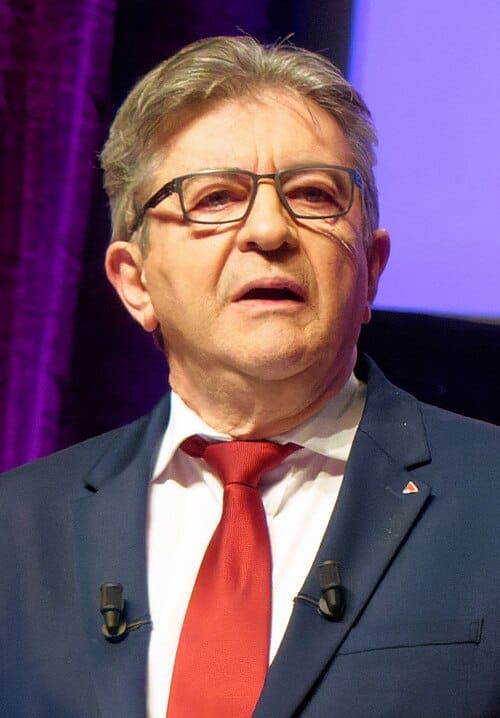
Jean-Luc Mélenchon of La France Insoumise (LFI - France Unbowed), the leading leftist hopeful in France’s upcoming presidential election, has followed a similar path. In February, he mocked the pronunciation of the surname of Jeffrey Epstein, the late financier and convicted child sex offender. The jibe was widely read, including by Jewish groups, as an anti-Semitic dog whistle. It was one of many such remarks he has made over the years.
What has become the norm demands explanation. The clearest is that the left has succumbed to a moral descent as it has rejected national sovereignty in favour of a hollow transnationalism. It increasingly expresses an aggressive anti-Zionism bordering on open anti-Semitism. Many on the left see this transnationalism as progressive. They view it as the exact opposite of the backwardness they attribute to a conservative national populism. Yet it is the transnationalist left, far more than the populist right, which has embraced a visceral anti-Zionism.
‘National populist’ is a term frequently used as an insult by some on the progressive left. It is used to deride those who have forcefully called for a defense of the nation, its borders, and its interests. In recent years the targets have included Viktor Orbán's Fidesz government in Hungary, Marine Le Pen's Front National (now RN - Rassemblement National) in France, Geert Wilders in the Netherlands and Germany's Alternative für Deutschland. Brexit too is loathed by many leftists as a national populist project.
In most mainstream commentary, the term carries a negative connotation. It is viewed as an anachronism, a retreat from a world that has already gone global. By contrast, the left populists found support in progressive mainstream outlets, from Germany's Der Spiegel to Britain's Guardian.
Syriza's surprise electoral breakthrough in January 2015 was hailed by many left-leaning commentators as the dawn of a new politics. But since losing power in 2019 it faced a steady decline followed eventually by a near collapse. A similar enthusiasm had greeted Spain's Podemos when it broke into parliament about a decade ago. Both parties were led by, or included, charismatic figures who became unlikely stars of the celebrity press. Varoufakis even appeared in Paris Match, a French weekly magazine featuring celebrity lifestyles, in 2015.
Part of the sympathy these movements attracted among Europe's leftists rested on the hope that they might break the momentum of the national populists. Chantal Mouffe, a Belgian left-wing intellectual, captured this hope in a 2018 article for the Guardian. arguing that right-wing populism could only be countered by taking its underlying democratic demands seriously and rearticulating them in what she called a "left populism."
Yet it is the national populists who have continued to thrive and win the trust of millions of European voters. Many of the left-populist figures Mouffe held up as hopeful alternatives no longer play a significant political role. Podemos and Syriza have become marginalised. Jeremy Corbyn lost his role as the Labour leader in Britain and was suspended from the party in 2020 over his response to an anti-Semitism report. Eventually Labour expelled him in 2024 when he stood to be an independent member of parliament. Although he retook his constituency his national profile was much diminished. Only Mélenchon in France retains a high profile although even he is outpolled by the national populist RN. The latter now draws substantial support from traditional working-class voters.
Some other left populist figures, such as Yanis Varoufakis and Pablo Iglesias, the founder of Podemos, have abandoned national politics altogether. Instead they have reinvented themselves as voices for a radical globalist left more concerned with demonising Israel than youth unemployment or sovereign debt at home.
Disappointment with the left populist parties set in early for reasons that had nothing to do with Israel or migration policy in the abstract. Syriza's own voters turned on the party after it failed to make good on its central promise: standing up to the EU. Podemos faced a similar credibility problem, not least over mass migration. It said it did not want to dismantle the physical border fences around Spain's North African enclaves of Ceuta and Melilla. Instead it favoured legal pathways and strict protection of human rights. Its position was vague enough to satisfy almost no one, at a moment when voter concern about unregulated migration was already rising sharply. In both the Greek and Spanish cases, the pattern that would later define these movements' turn to transnational causes was already visible. There was a widening gap between what had been promised to a domestic electorate and what was delivered.
Still, it is telling that what now unites these left-wing figures is, above all, their anti-Zionism and their open embrace of Islamo-leftism. Corbyn was suspended from the Labour Party after repeated anti-Semitism scandals and open support for Hamas. He notoriously referred to invited representatives of Hamas and Hezbollah as "friends" at a 2009 parliamentary meeting. In 2016 he said he regretted using this word but he did not apologise for it. In 2023, before being expelled from the Labour party, he finally referred to Hamas as a “terrorist group”. Nevertheless, when he did so he compared it with the Israeli army.
Varoufakis, through his pan-European movement DiEM25, has described Hamas as "freedom fighters”, even after the October 2023 massacre. Like Iglesias in Spain, he calls Israel an apartheid state engaged in ethnic cleansing.
Mélenchon, apart from the February incident, has a long history of anti-Semitic remarks. On 18 June 2026, he accused the Representative Council of French Jewish Institutions (CRIF) of being a "far-right machine" that politicians "line up" to be funded by. Mélenchon’s remarks were made after the CRIF president, Yonathan Arfi, criticised an LFI-organised concert that Paris police had briefly banned.
In many ways, these politicians' growing distance from their traditional voters at home has let an older current in their politics move to the centre: their anti-Semitism. It turns out this goes back years. Mélenchon was already trading in anti-Semitic tropes as far back as 2013, when he accused then-French finance minister Pierre Moscovici of no longer "thinking French," but instead in "the language of international finance”.
Today, both Corbyn and Mélenchon increasingly court Europe's Muslim minority, now a significant voting bloc. For DiEM25, meanwhile, unburdened by any national politics at all, Palestine solidarity has become the movement's defining cause.
It is hardly surprising those who reject national sovereignty find it easy to condemn Israel's fight against an existential Islamist threat. The populist left's hostility to nationalism has led it in an entirely negative direction. It lauds Islamist movements as heroic opponents of supposed western oppression and of Israel. This outlook sits well with the old Soviet-era propaganda slogan, once endorsed by the United Nations, that Zionism is racism.
The fatal flaw of left populist movements should be clear. Each has substituted the judgment of a domestic electorate with the authority of the moral claims of the foreign causes it has chosen to champion. In moving away from their national voter base, they have opened themselves up ever further to an increasingly ugly, obsessive anti-Zionism. That is the clearest sign yet of how far the flight from national sovereignty can carry a movement from the people it once claimed to represent.
Sabine Beppler-Spahl is the chair of the Freiblickinstitut, a liberal think tank based in Berlin, and the Germany correspondent for spiked.
The views expressed in this article do not necessarily reflect those of the Radicalism of fools project.
FURTHER READING
PHOTO: "Jean-Luc Mélenchon 2022 (cropped)" by Thomas Bresson is licensed under CC BY 4.0.